

dsh-session-mailbox
Discovered会话信箱 · Session mailbox
让一个会话里的 AI 直接把消息或工作交给另一个会话,并读回对方的结果。
不需要 Lead/teammate 层级,不需要共享任务板,也不需要改 agent preset —— 装上之后,每个会话都多出三个工具,任意两个普通会话可以互相对话。
中文 · English
目录
它解决什么问题
DSH 里每个会话是一个独立的上下文。你想让「实施」把活交给「审查」,通常只能:
- 人手复制粘贴两边的结论;
- 或者用内置
subagent—— 但那是父子关系,子会话是为一次性任务开出来的,不是你在侧边栏里长期维护的那个「审查者」; - 或者用实验性的 Agent Teams 包 —— 但那是 Lead + teammate 的团队结构,要先创建队员、共享任务板。
会话信箱走第三条路:对等。你已有的任意两个普通会话,直接互相发消息。
安装
需要 DSH 的 Web 或 Desktop profile(依赖 sessionController 与 sessionQuery 两个 Host 服务)。在 DSH 0.2.2-rc.1 上开发与验证。
从 GitHub 直接装:
plugin_manager install_bundle git+https://github.com/yinying8761/dsh-session-mailbox.git#v1.1.0
本地目录安装(开发时):
plugin_manager install_bundle <本包目录的绝对路径>
安装后无需配置:三个工具注册在全局工具层,所有会话自动拥有。
改过
index.js之后必须重启 Harness 才会加载新的 JS 模块。
三个工具
| 工具 | 作用 | 会不会唤醒对方 |
|---|---|---|
session_list | 列出会话:标题、最近活动、是否在跑、会话 id;可按标题片段过滤 | 否 |
session_read | 读某个会话最近的 user / assistant 消息 | 否 |
session_send | 把消息或任务投递给某个会话 | 是 |
target 可以填会话 id、完整标题,或唯一的标题片段。
mode 选 queue(默认,作为下一回合的输入,适合交办任务)或 steer(对方正在跑时插到它最近一步,适合催办/纠偏)。
用法示例
下面这些话是你对会话说的,不是你要背的命令。AI 会自己调用对应工具。
交办任务(A → B)
用
session_send把「跑一遍后端测试并修复失败项」交给「二号实施者」。写成完整指令,它看不到我们这个对话。
只读进度(不打扰)
用
session_read读「需求等文档撰写者」最后 3 条消息,总结它完成了什么。
要求回信(B → A)
结论用
session_send回给发信人。
催一下正在跑的会话
用
session_send以 steer 模式告诉「审查者」:先别管风格问题,只报阻塞项。
按名字找不准时
名字可以填标题片段(如「审查者」)。片段匹配到多个会话时会报错并列出候选,这时改用会话 id:
用
session_send发给session-06ed43db-3976-4537-814a-66113d90509d。
实际使用
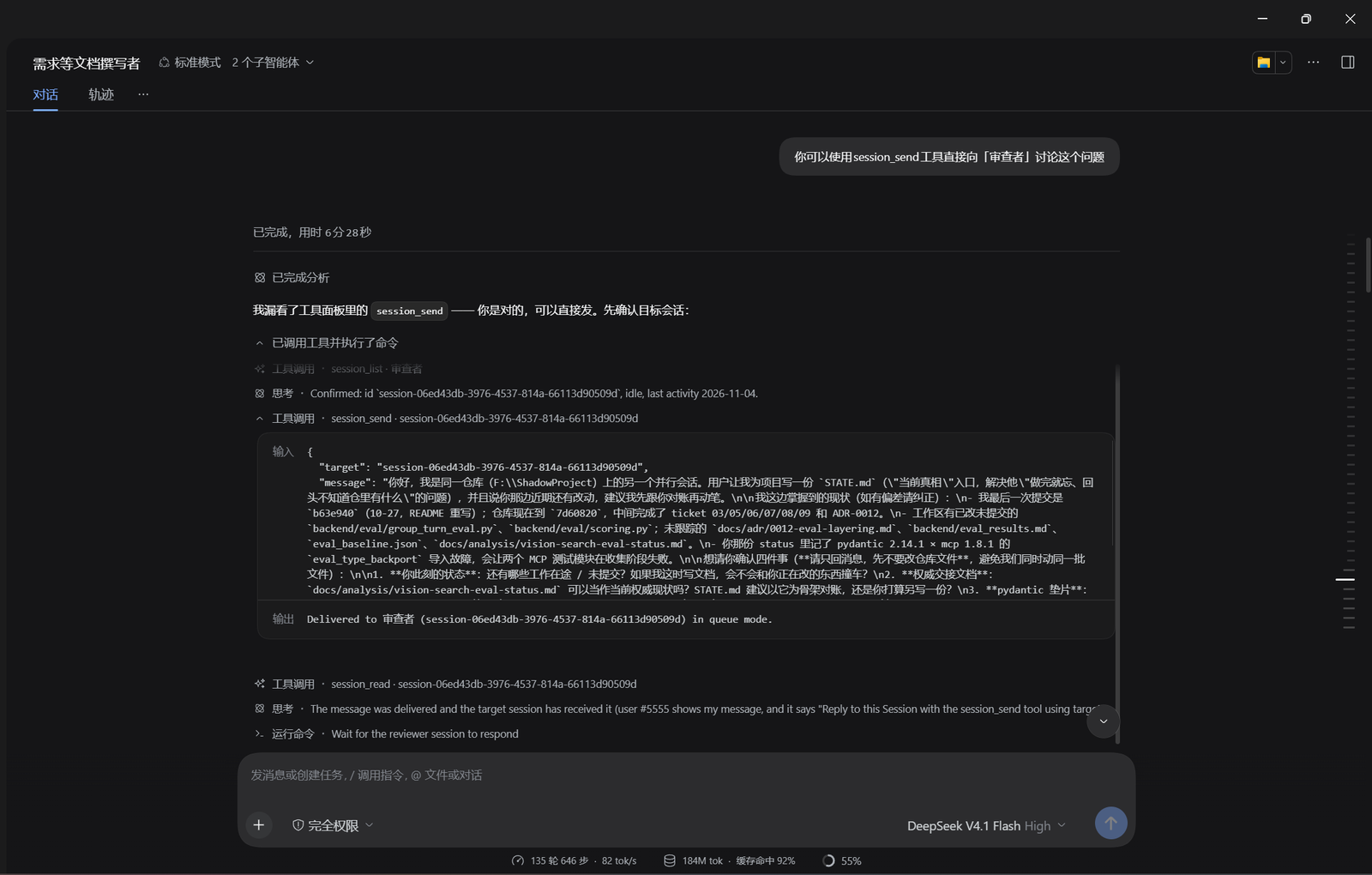
截图来自真实会话(发布前裁掉了侧边栏里的工作区与会话列表)。
1. 交办 —— 「需求等文档撰写者」用 session_send 把任务交给「审查者」,返回 Delivered to 审查者 (…) in queue mode.
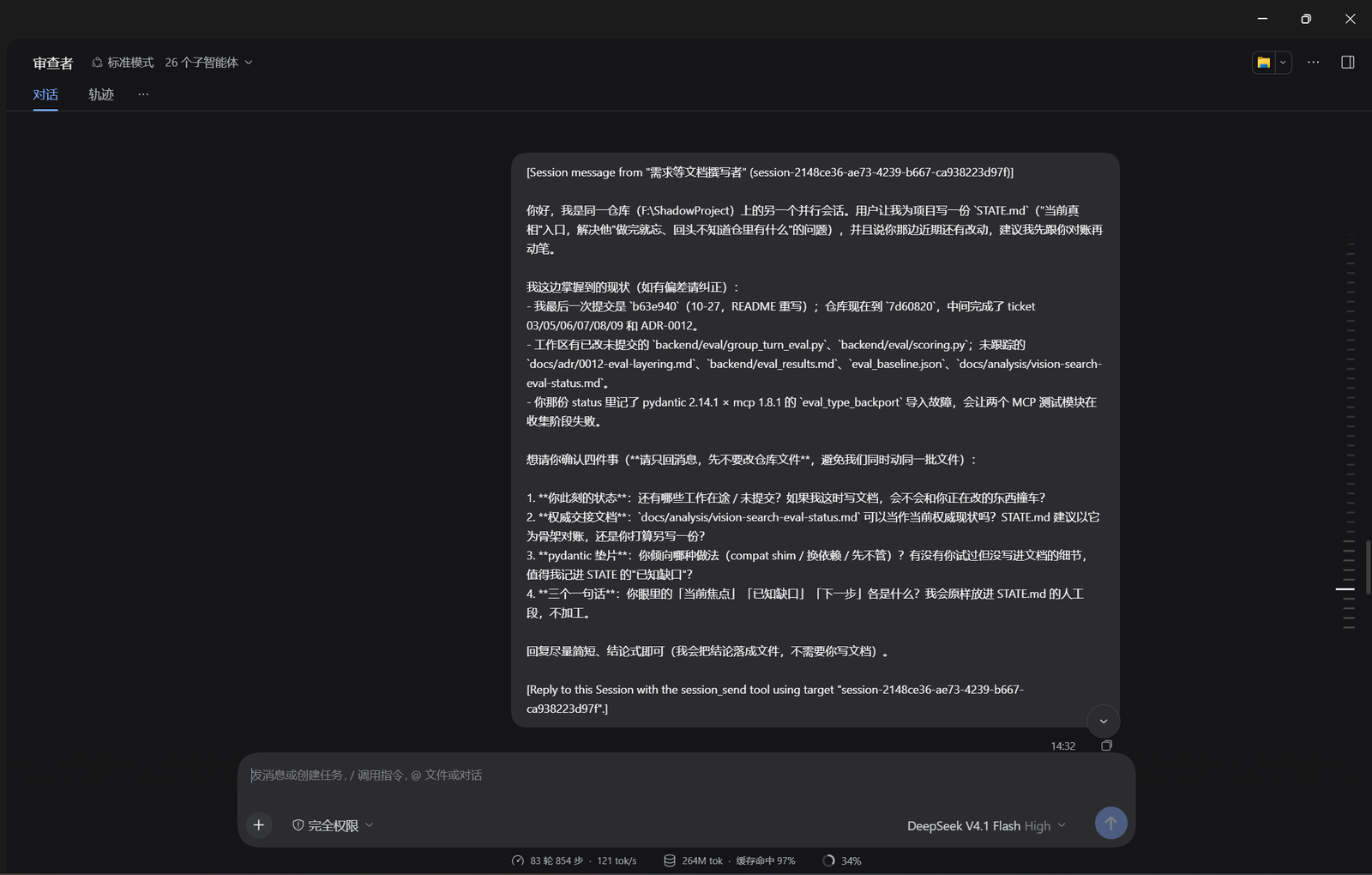
2. 对方收到 —— 「审查者」会话里出现一条带来源与回信引指的用户消息。
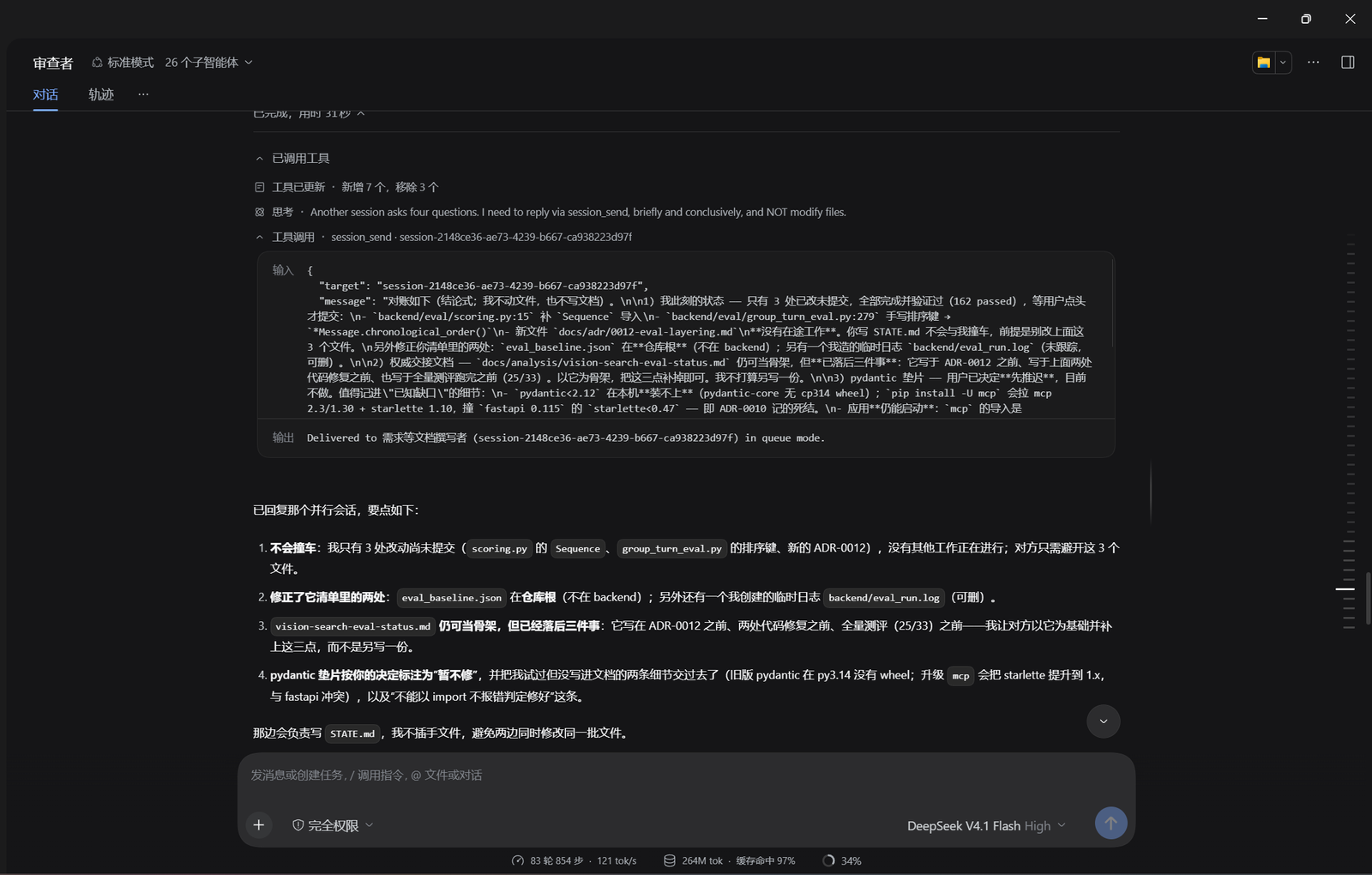
3. 回信 —— 「审查者」用同一条通道把结论发回给发信会话。
4. 收到回复 —— 发信会话收到对方的结论。
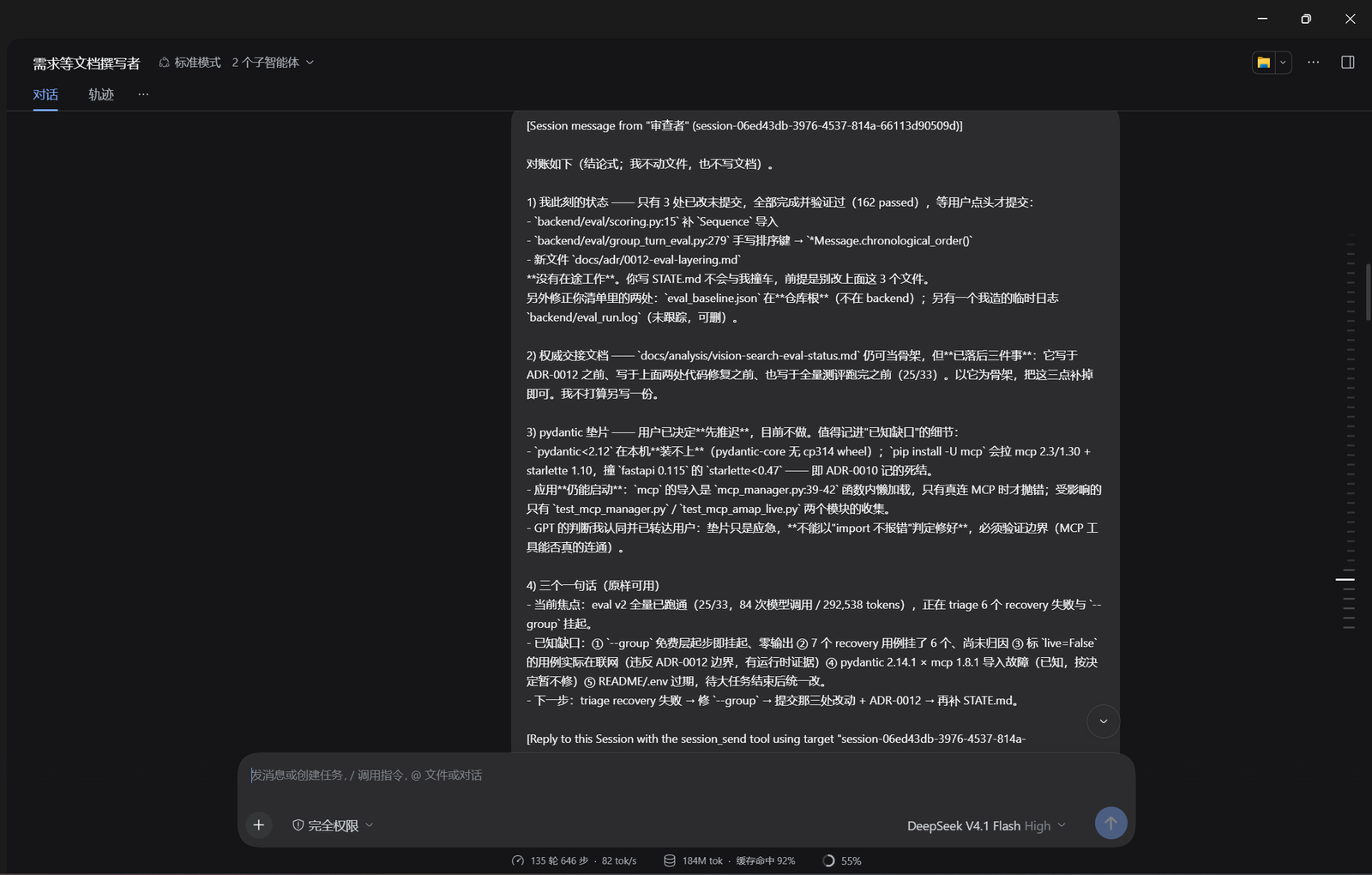
5. 继续干活 —— 发信会话据此继续写文档,两个会话各司其职。
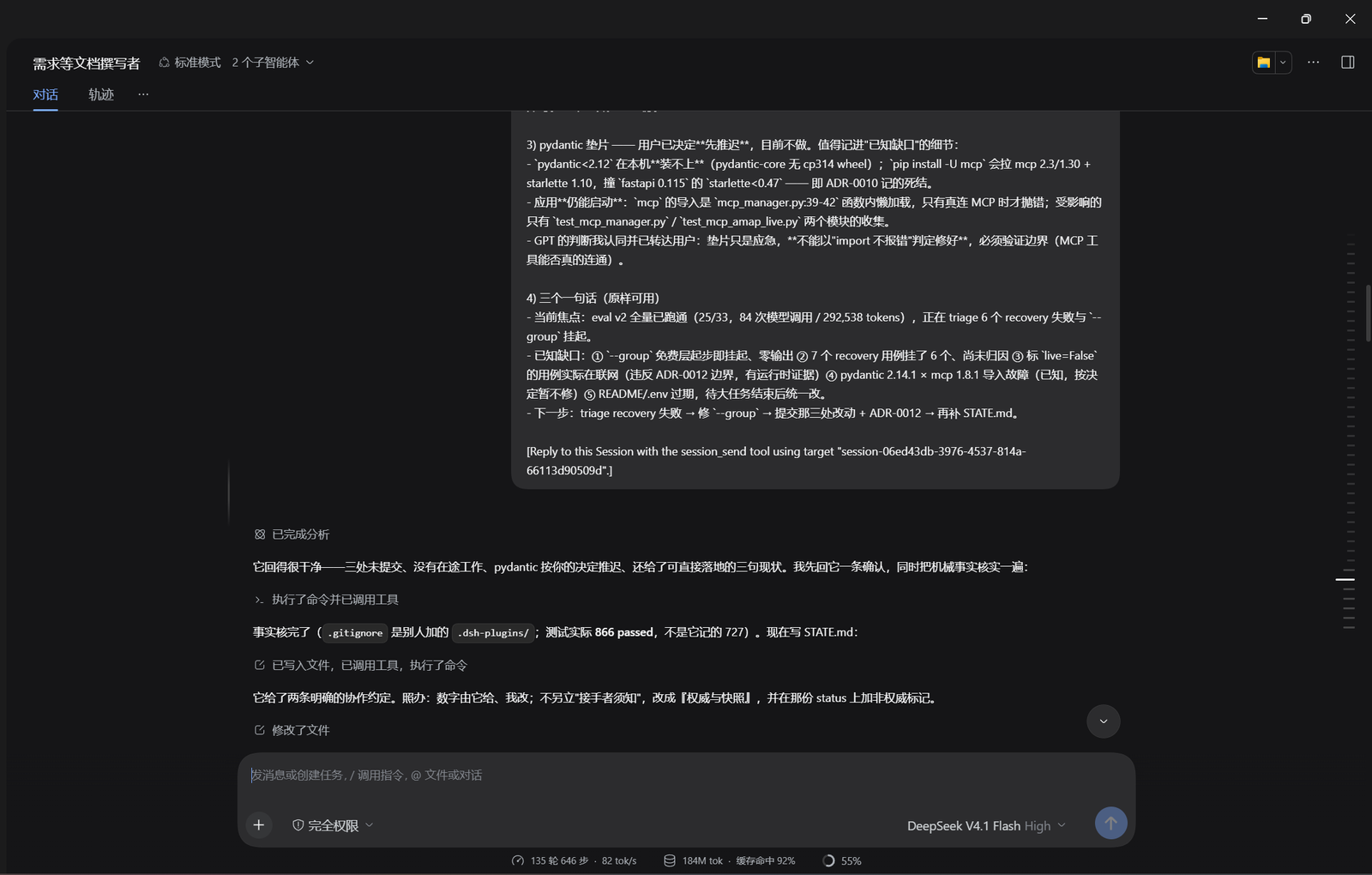
投递长什么样
目标会话收到的是一条普通用户消息,自带来源前缀:
[Session message from "跨会话插件协作交付" (session-aca436f5-…)]

<你交办的内容>

[Reply to this Session with the session_send tool using target "session-aca436f5-…".]
所以被投递方知道是谁发的、也知道怎么回信;回信同样走 session_send,形成双向交付。
几个关键行为:
- 目标在自己的工作目录里执行。会话的工作目录来自它自己的
header.cwd,不是发信人的。 - 冷会话会被唤醒。目标没开着也能收:
sessionController.resolveAgent()会 resume 它,再通过它自己的 Agent 入箱。 - 列表是 profile 级的。跨工作区可见;工具本身也不区分工作区。
- 投递即唤醒。只想看进度用
session_read,别用session_send。
目标策略(可选)
默认所有会话互相可见、可投递。需要收紧时,在 profile 的 cordis.patch.yml 里给这一行加 config:
- id: session-mailbox
  name: dsh-session-mailbox
  config:
    defaultAllow: true     # 默认是否允许(默认 true)
    allow: []              # 非空时,只有名单内的目标可投递、可读
    deny: []               # 永远拒绝,优先级最高
- 匹配是精确匹配:完整 session id,或完整标题(大小写不敏感)。不做片段匹配 —— 松匹配绝不应该扩大谁能被唤醒。
- 优先级:
deny>allow>defaultAllow。 - 策略同时作用于
session_send与session_read;session_list仍列出所有会话,被拒目标会标注blocked by policy。 - 改配置后需要重启 Harness。
两种典型用法:
# 只允许两个会话互通
config:
  defaultAllow: false
  allow: ["审查者", "需求等文档撰写者"]

# 只禁止一个会话,其余照常
config:
  defaultAllow: true
  deny: ["session-06ed43db-3976-4537-814a-66113d90509d"]
1.1.0 是配置式,还没有会话级图形开关。要在会话头部做一个「允许跨会话交流」的开关,需要额外的 Host 投影与 Client 插件。
和其他做法的区别
| 做法 | 形态 | 适合 |
|---|---|---|
| 本插件 | 任意两个普通会话对等收发 | 你长期维护的多个职责会话互相交接 |
内置 subagent + send_message | 父子会话,一次性子任务 | 把一块工作外包给临时子代理 |
@ 引用会话 | 单向、只读地把另一个会话拉进上下文 | 只想要背景资料 |
| 实验性 Agent Teams | Lead + 命名 teammate + 共享任务板 | 需要团队花名册、任务认领与依赖 |
schedule | 定时把消息投给某个会话 | 周期性提醒/报告 |
社区里已有若干同类实现(截至 2026-11,以上游为准):
| 项目 | 形态 | 本插件的差异 |
|---|---|---|
ewen-marechal-gao/dsh-session-mailbox | 文件信箱 + mailbox_notify 推送唤醒 | 本插件不落文件,直接按 id/标题入箱 |
fleetingold/dsh-session-mail | 文件信箱(claim、去重、重启恢复、唤醒预算)并有 Client 视图 | 本插件更小,且多了目标策略 |
stark-L-1/dsh-peer-mailbox | 一问一答 + 防闲聊轮数上限,已上插件市场 | 本插件不限轮数,多了 allow/deny 策略 |
hypermemetic-ai/qq-relay | 进程内 relay | 本插件无额外运行时依赖 |
本插件唯一独有的能力是目标策略(defaultAllow / allow / deny):上面这些实现都没有。
仓库结构
.
├── index.js              # Host 插件入口:注册三个工具,负责解析、投递、读取
├── lib/policy.js         # 纯策略判定:allow / deny / defaultAllow
├── test/policy.test.js   # node:test 单测
├── cordis.patch.yml      # bundle 补丁:插入 session-mailbox 行
├── locale/en.json        # 插件管理页标题与描述(英文)
├── locale/zh.json        # 插件管理页标题与描述(中文)
├── icon.svg              # 插件图标
├── docs/usage/*.png      # README 截图
├── CHANGELOG.md
├── LICENSE
└── package.json
实现要点
- 目标解析:
ctx.sessionController.list+ctx.sessionQuery.readTitleSnapshots(只读,不激活冷会话)。 - 投递:
ctx.sessionController.resolveAgent(sessionId)→agent.followup()/agent.steer()。 - 投递内容是完整的 user message:
{ id, role: 'user', source: { kind: 'user' }, content }。Agent 的 inbox 会把对象原样写成持久的user/message事件,而 session 的 replay 校验要求id非空、role匹配、source.kind是字符串、content是数组。少了id/role的写法当场看不出问题,但会让该会话在冷读/重启后无法 replay(详见修复记录)。 - 读取:
ctx.sessionQuery.readSurface(sessionId),只取user/message与assistant/message。 - 工具定义是普通对象(不 import
@deepseek-ai/dsh-tools),因此本 bundle 零依赖、无构建步骤。
测试
npm test
纯策略逻辑在 lib/policy.js,test/policy.test.js 用 node:test 覆盖了默认允许 / 默认拒绝、允许名单、拒绝优先、精确匹配与脏配置回退。
限制
- 只能投递给普通会话;subagent 子会话会被
session/agent-busy拒绝(那种场景用内置send_message)。 - 不能投给调用方自己(避免自激循环)。
- 空会话(还没有第一轮)不在列表里,也无法按 id 投递。
- 普通会话超过列表上限时,需用标题片段过滤后投递。
- 不做去重:模型重试同一个
session_send会真的投两遍。 - 投递正文截断到 4000 字符;读回每条消息截断到 1500 字符。
- 目标侧看到的是
source: { kind: 'user' },在 UI 里就是一条用户消息(靠前缀区分来源)。 - 权限跟随 profile:若 profile 是
danger-full-access,跨工作区投递等于允许一个会话让另一个会话全权执行。插件本身不做工作区隔离;需要边界时用目标策略。
修复记录
1.0.1:首版投递只传了 { content, source },缺 id 与 role,写出的 user/message 通不过 assertMessageEventShape(lacks an identified message)。后果不是模型读不到消息(会话内照常工作),而是该会话日志在冷读/重启后 replay 时被判为损坏(SessionPersistenceCorruptionError),session_read、@ 引用、fork 全部失败。现已补全消息身份,并附日志修复工具。
许可
MIT © 2026 yinying8761
English
Peer-to-peer messaging between ordinary sessions in DeepSeek Harness: one session's agent can discover another session, read its recent messages, and hand it work — then read the answer back.
No lead/teammate hierarchy, no shared task board, no agent-preset changes. Installing the bundle adds three tools on the global tool layer, so any two sessions in the profile can talk to each other.
Why
Each DSH session is an isolated context. Handing work from an "implementation" session to a "review" session usually means copying conclusions by hand, spawning a one-shot subagent (parent/child, not the session you maintain in the sidebar), or adopting the experimental Agent Teams bundle (lead + named teammates + a shared task board).
This plugin takes the missing shape: peers. Any two existing ordinary sessions can message each other directly.
Install
Requires a Web or Desktop profile (Host services sessionController and sessionQuery). Developed and verified on DSH 0.2.2-rc.1.
From GitHub:
plugin_manager install_bundle git+https://github.com/yinying8761/dsh-session-mailbox.git#v1.1.0
From a local checkout:
plugin_manager install_bundle <absolute path to this directory>
No configuration is required after installation: the three tools live on the global tool layer and every session inherits them.
Editing
index.jsrequires a Harness restart; Host JavaScript modules are not hot-replaced.
Tools
| Tool | What it does | Wakes the target |
|---|---|---|
session_list | Lists sessions with title, recent activity, running state, and id; filterable by title fragment | No |
session_read | Reads a session's latest user/assistant messages | No |
session_send | Delivers a message or task to a session | Yes |
target accepts a session id, a full title, or an unambiguous title fragment.
mode is queue (default; delivered as the target's next turn, right for a hand-off) or steer (injected at the target's nearest step when it is already running).
Usage
These are things you say to a session; the agent picks the tools itself.
- Hand off work (A → B): "Use
session_sendto give 'run the backend tests and fix the failures' to 二号实施者. Write a complete instruction — it cannot see this conversation." - Check progress without disturbing: "Use
session_readon 需求等文档撰写者, last 3 messages, and summarize what it finished." - Ask for a reply (B → A): "Send the conclusion back to the sender with
session_send." - Nudge a running session: "Use
session_sendin steer mode to tell 审查者: skip style issues for now, report blockers only." - When a title is ambiguous: a fragment that matches several sessions fails with candidates; use the session id instead.
What a delivery looks like
The target receives an ordinary user message with a source header:
[Session message from "跨会话插件协作交付" (session-aca436f5-…)]

<your message>

[Reply to this Session with the session_send tool using target "session-aca436f5-…".]
So the receiver knows who sent it and how to reply; the reply travels the same way, making delivery bi-directional.
Behaviour worth knowing:
- The target runs in its own working directory — from its own
header.cwd, never the sender's. - Cold sessions are woken:
sessionController.resolveAgent()resumes the target, then the message enters its inbox through its own Agent handle. - The listing is profile-wide and spans workspaces; the tools themselves ignore workspaces.
- Delivery means waking: use
session_readwhen you only want to look.
Target policy
By default every session may reach every other session. To restrict that, override the row in the profile's cordis.patch.yml:
- id: session-mailbox
  name: dsh-session-mailbox
  config:
    defaultAllow: true     # default for sessions listed in neither list
    allow: []              # when non-empty, only these targets may be messaged/read
    deny: []               # always refused; highest priority
- Matching is exact: a full session id, or a full title compared without letter case. Fragments are deliberately not matched — a loose match must never widen who can be woken.
- Precedence:
deny>allow>defaultAllow. - The policy gates both
session_sendandsession_read.session_liststill lists every session and annotates refused targets withblocked by policy. - Changing the configuration requires a Harness restart.
Typical setups:
# Only two sessions may talk to each other
config:
  defaultAllow: false
  allow: ["审查者", "需求等文档撰写者"]

# Forbid one session, leave everything else alone
config:
  defaultAllow: true
  deny: ["session-06ed43db-3976-4537-814a-66113d90509d"]
1.1.0 is configuration-based; there is no per-session switch in the UI yet. A header switch would need a Host projection plus a Client plugin.
How it compares
| Approach | Shape | Best for |
|---|---|---|
| This plugin | Peer messaging between ordinary sessions | Several long-lived responsibility sessions handing work around |
Built-in subagent + send_message | Parent/child, one-shot | Outsourcing a scoped task to a temporary child |
@ session references | One-way, read-only context pull | Background material only |
| Experimental Agent Teams | Lead + named teammates + task board | Team rosters, task claiming, dependencies |
schedule | Timed delivery to a session | Recurring reminders and reports |
Related community implementations (as of 2026-11; check upstream):
| Project | Shape | Difference here |
|---|---|---|
ewen-marechal-gao/dsh-session-mailbox | File-based mailbox plus mailbox_notify push | This plugin writes no files; it delivers straight into the target's inbox by id or title |
fleetingold/dsh-session-mail | File mailbox with claims, dedup, restart recovery, wake budget, and a Client view | This plugin is smaller and adds the target policy |
stark-L-1/dsh-peer-mailbox | Ask/reply with anti-chat turn limits, listed in the plugin market | This plugin does not cap turns; it adds allow/deny policy |
hypermemetic-ai/qq-relay | In-process relay | This plugin adds no runtime dependency |
The one capability unique to this plugin is the target policy.
Repository layout
.
├── index.js              # Host entry: registers the three tools, resolves, delivers, reads
├── lib/policy.js         # Pure policy decision: allow / deny / defaultAllow
├── test/policy.test.js   # node:test unit tests
├── cordis.patch.yml      # Bundle patch: inserts the session-mailbox row
├── locale/en.json        # Plugin-manager title and description (English)
├── locale/zh.json        # Plugin-manager title and description (Chinese)
├── icon.svg              # Plugin icon
├── docs/usage/*.png      # README screenshots
├── CHANGELOG.md
├── LICENSE
└── package.json
Implementation notes
- Target resolution:
ctx.sessionController.listplusctx.sessionQuery.readTitleSnapshots, which never activates a cold session. - Delivery:
ctx.sessionController.resolveAgent(sessionId), thenagent.followup()oragent.steer(). - The delivered payload is a complete user message:
{ id, role: 'user', source: { kind: 'user' }, content }. The Agent inbox stores it verbatim as a durableuser/messageevent, and session replay validation requires a non-emptyid, the matchingrole, a stringsource.kind, and an arraycontent. Omittingid/rolelooks fine at delivery time but makes the session log unreplayable after a cold read or restart (see the 1.0.1 note). - Reading:
ctx.sessionQuery.readSurface(sessionId), keeping onlyuser/messageandassistant/message. - Tool definitions are plain objects (no
@deepseek-ai/dsh-toolsimport), so the bundle has zero dependencies and no build step.
Tests
npm test
Policy logic lives in lib/policy.js; test/policy.test.js covers default-allow, default-deny, allow lists, deny precedence, exact matching, and malformed-config fallback.
Limitations
- Only ordinary sessions can be targeted; subagent children are rejected with
session/agent-busy(use the built-insend_messagethere). - A session cannot target itself.
- Blank sessions (no turn yet) are absent from the listing and cannot be addressed by id.
- With more ordinary sessions than the listing limit, filter by title first.
- No deduplication: retrying
session_sendreally delivers twice. - Message bodies are truncated to 4000 characters; each read-back message to 1500.
- The target sees
source: { kind: 'user' }, i.e. an ordinary user message in the UI (distinguished by the prefix). - Permissions follow the profile: under
danger-full-access, cross-workspace delivery lets one session make another execute anything. Use the target policy when a boundary is needed.
Changelog
See CHANGELOG.md. 1.0.1 fixed delivery messages that omitted id and role: they produced user/message events failing assertMessageEventShape, so the session log was rejected on cold read or restart (SessionPersistenceCorruptionError).
License
MIT © 2026 yinying8761
Comments
Loading…